A well known senior advocate of Fascial Unwinding is osteopath Viola Fyman, a student of Dr William Garner, who explained: “If we place the body in the position it was in during injury – and let it move naturally – the fascia may unwind and discharge the force of that impact”.
Fascia A Re-emerging Frontier In Health

Although Fascia’s role in the body is crucial to health, for the longest time, the significance of fascia, has been an overlooked.
After decades of being ignored and discounted in science and healthcare, in the last 20 years + fascial research, has exploded. This has lead to an acknowledgement of the fascial system as being our largest sensory organ and a whole-body system, in its own right, that holds onto memory, both physically and emotionally.
What’s Fascia?
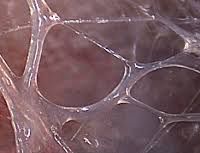
Fascia is the matrix, that enables continuity, interconnection and communication throughout the whole body-mind, enveloping and penetrating deeply into, every organ, tissue, muscle, nerve, blood cell and blood vessel.
Tuning into the fascial system, with light touch, enables practitioners, to get a global picture of the subtle, pulls, twists, tensions and vocal points of restriction throughout the whole body, that commonly result from physical injury, emotional tension and other causative factors.
Types of Fascia
There are three types of fascia that are responsible for different jobs.
Superficial fascia
This layer of fascia is situated just under our skin. It contains fat, nerves, and blood vessels. According to one report, it is estimated that fascia contains more than 250 million nerve endings—more nerve endings than skin!
Deep fascia
This type of fascia which is extremely strong and fibrous, surrounds our muscles, bones, nerves and blood vessels.
Visceral fascia
This type of fascia wraps around the internal organs, specifically the heart, lungs, and intestines.
Fascial Research
Emerging research suggests that fascia affects multiple physiological and regulatory systems throughout the body including, circulation, fluid exchange, posture, autonomic and neurovascular regulation, including the control of blood pressure and the modulation of blood flow to the central nervous system and heart during stress.
It also influences hormonal production and secretion, including adrenaline, oestrogen, insulin, thyroid hormones, and oxytocin (the love hormone).
Tensile Strength
Fascia is immensely strong, so if any part of the fascia is twisted, pulled and imbalanced, it will affect the whole body in some way. Fascia can tighten, harden, twist, glue together and become inflamed due to constant stress, injuries and lack of movement and when fascia tightens and hardens it can cause body systems not to function optimally.
Hence the aim of Fascial unwinding is to support the body in unwinding seemingly unconnected areas of tension, which assists the body in returning to a freer, more open, fluid and functional state.
What’s Fascial Unwinding?
Like Craniosacral Therapy. ‘fascial unwinding’ originated in osteopathy and the term was originally coined to describe the involuntary, spontaneous, movements that many people experience during treatment sessions.
What does Fascial Unwinding Do?
The more stressful events we experience, the more wound-up our system can become. Hence after experiencing an unwinding, people often report feeling a greater degree of relaxation, freedom and spaciousness in their body.
Where You Think It Is, it Ain’t
The phrase: ”Where you think it is, it ain’t “ was a one of Dr Ida P Rolfs, (the founder of Rolfing) well known aphorisms.In other words, where it hurts is not necessarily the source of the problem.
When we experience discomfort, pain and restricted range of motion, it’s easy to focus in, on that specific area and to loose sight of the rest of the body.
For example, an ascending pattern in the pelvis, legs and feet may be linked to issues, developing further up the body, including conditions such as headaches and neck and shoulder pain.
This is why the pelvis coming back into alignment, may unwind chronic tension in the shoulders and the jaw or an ankle sprain unwinding and realigning may help resolve acute pain in the shoulders.
This is a reminder that nothing occurs in isolation, as everything is a relationship !
For more information on fascial unwinding click on the article below.